A Food Town Finds Its Stride
For years, Budva's restaurant scene was predictable: grilled fish, mixed-meat platters, and shopska salad at every waterfront table. That baseline still exists, and honestly, a well-grilled brancin at a harbour konoba for €10 is hard to fault. But the last five years have brought change. Young Montenegrin chefs who trained in Italy, Serbia, and France are returning to the coast and opening places that care about sourcing, technique, and wine lists.
The ingredients were always here. The hills above Budva grow olives, figs, and herbs that you can smell from the road. Njeguški pršut, dry-cured ham from the village of Njeguši above Kotor, is one of the finest charcuterie products in the Balkans. Cheese from Kolašin arrives on the coast within hours of being made. The sea delivers squid, bream, mussels, and octopus daily. What changed is that chefs started treating these ingredients with respect rather than drowning them in oil and serving them on a generic white plate.
Along the Waterfront
The strip between the old-town walls and Slovenska beach hosts a dense row of restaurants, most with sea-facing terraces. Quality varies sharply, some are tourist traps running on foot traffic, others are genuinely excellent. The telling signs: a short menu that changes regularly, fish priced by the kilo rather than a flat rate, and a wine list that goes beyond the three national brands. Look for places where locals are eating. If every table is speaking English or German, move on. The best waterfront spots serve whole grilled fish, octopus salad with capers, and brudet, a slow-cooked fish stew with polenta that is the coast's comfort food.
Inside the Old Town
Dining inside the walls is about atmosphere more than innovation. The lanes are narrow, the tables are squeezed into stone courtyards, and the menus lean traditional. The Citadela restaurant, perched on the fortress terrace at the peninsula's tip, charges premium prices for sunset views and Mediterranean-influenced dishes, worth it for a special evening. Below the walls, smaller konobas serve grilled meat and seafood at fairer prices. The old-town square hosts a couple of wine bars that pour Montenegrin labels by the glass, which is a good way to sample Vranac and Krstač without committing to a full bottle.
Hilltop Dining Above the Coast
Some of the best meals on the coast happen above it. A few restaurants sit on the hillsides between Budva and Sveti Stefan, offering panoramic coast views from terraces set among olive and fig trees. The food at these places tends toward Montenegrin slow-cooking: lamb under the sač (a metal dome over charcoal), peppers stuffed with kajmak cheese, and bean stews that taste better than they sound. The drive up is short but steep, another reason to have a car. Combine a hilltop lunch with the Sveti Stefan viewpoints drive.
The Seafood to Order
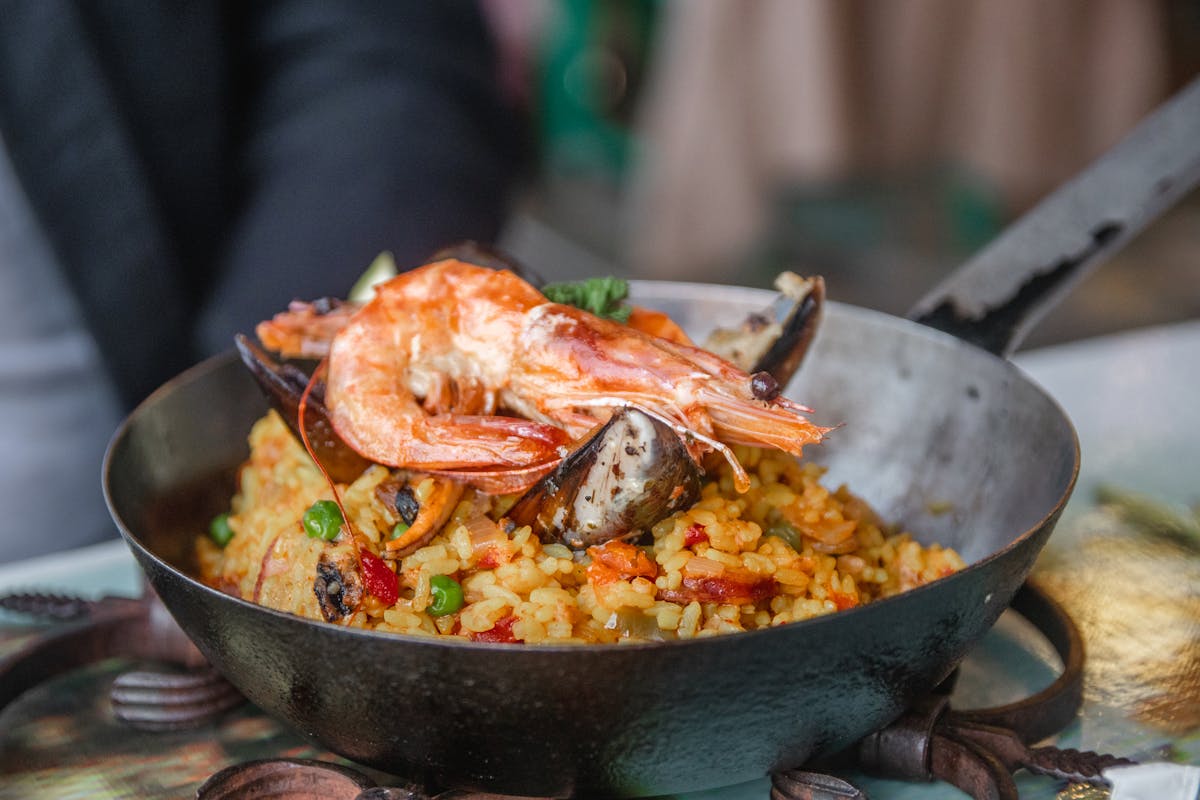
Montenegrin seafood is simple and best kept that way. Grilled brancin (sea bass) and orada (bream) are the flagship dishes, ask for them whole, grilled with olive oil and lemon, and judge a restaurant by how well they handle these two. Octopus is served either grilled or in a cold salad with onions, capers, and parsley, both versions should be tender, not chewy. Black risotto (crni rižot) made with cuttlefish ink is a coastal staple. And škampi na buzaru, prawns cooked in garlic, white wine, and breadcrumbs, is the dish that makes you order a second basket of bread. If you are feeling adventurous, ask for lignje punjene, squid stuffed with cheese and ham.
The Green Market
Every morning, Budva's green market opens behind the main bus station. It is small but packed: local farmers sell tomatoes that taste like tomatoes, bundles of fresh herbs, figs in season, honey from the hills, and kajmak, the thick, slightly tangy cream cheese that goes with everything. In autumn, pomegranates and persimmons appear. Early-morning visits (before 9am) get the best selection. Even if you are not cooking, it is worth a visit to see what grows on the hills behind the high-rise hotels.
Eating Tips
- Reservations: Essential at the better places in July and August, especially for waterfront tables. Book by phone, most do not use online platforms.
- Lunch deals: Several restaurants offer a dnevni meni (daily menu) at lunch, soup, main, and drink for €8-12. Better value than the evening à la carte.
- Wine: Order Montenegrin. Vranac (red) and Krstač (white) are the national grapes. Plantaže is the big producer but smaller Crmnica labels are more interesting.
- Cash or card: Most restaurants accept cards now but smaller konobas and the green market are cash-only. Keep €20 in small notes.
At a Glance
Car rental FAQ
Driving and parking questions for a night out at Budva’s restaurants.
Where do I park for the Budva seafront restaurants?
The metered Slovenska bays are closest to the harbour konobas, but they fill by early evening in summer. The TQ Plaza underground lot is the reliable fallback and a short walk from the waterfront.
Is a car worth it just for the food scene?
Yes if you want the hilltop konobas above town or the fish restaurants at Pržno and Petrovac, which the buses do not reach after dark. A small hatch parks easily at all of them.
Can I drive to a konoba and still have a drink?
Montenegro has a low drink-drive limit that is strictly enforced. Nominate a non-drinking driver, or park in town and taxi to the hillside places if wine is part of the evening.
Which car suits restaurant-hopping along the coast?
A compact like the Fiat 500 or Peugeot 208; small enough for the tight village lanes at Pržno and easy to slot into the harbour bays between Budva and Petrovac.
Live prices and availability for your exact dates.
Free cancellation available on most cars